

Trauma Sensitivity & Duty of Care Interview Training
Sarajevo Image
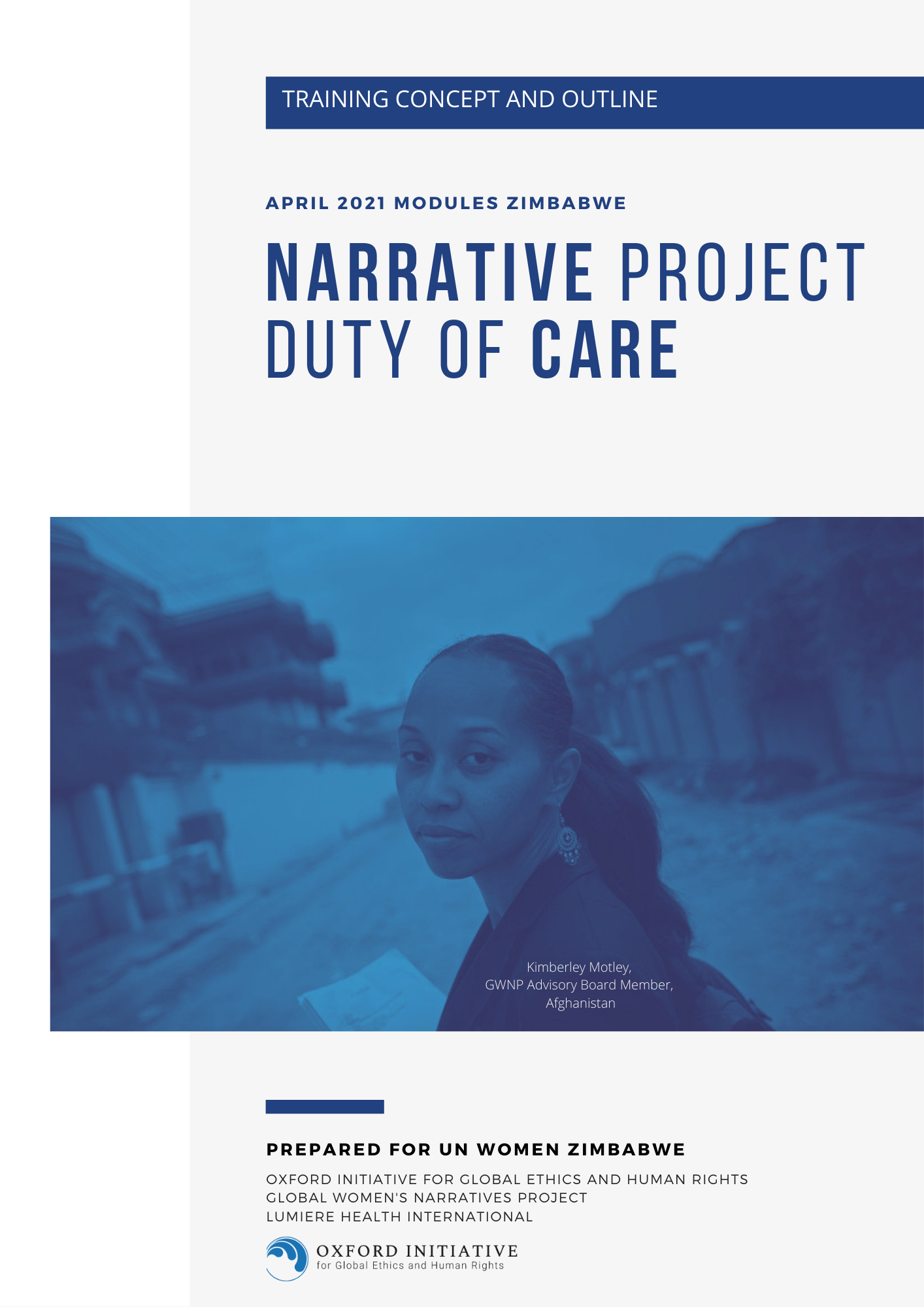
Our Narrative Training Program —Duty of Care—provides both theoretical and practical grounding for those interviewing women as part of the Global Women’s Narratives Project (GWNP). The training is required for GWNP editing teams, interviewers, and community partners, and it is also valuable for educators, nonprofit partners, and professionals working with women experiencing complex vulnerabilities or living in settings of violence. More information on our focus on women post-violence and the international legal right to mental health.
Duty of Care Conceptual Modules
CAPACITY, WELLNESS, & RESILIENCE
MODULE 1: Theories and ethics of narrative.
Responsibility of Bearing Witness | Justice or Moral Cause Stories as Value and Meaning | The Wounded Storyteller | Frames of Restitution, Chaos, and the Quest | Duty of care for oneself and others | 'Generous' questions techniques
MODULE 2: The unique role of women.
Psychology and Gender | Intergenerational trauma | Roles of history, culture, religion | Complex vulnerabilities | Moral agency and narrative constructions including oppression and community | Situatedness
MODULE 3: Trauma-informed interviewing techniques.
Trauma-informed interventions | Stabilization and grounding techniques | Identifying and working with the "fight-flight response" | Multi-level listening skills | Sitting with silence | Aftercare—post interview
Objectives of GWNP Narrative Training
Witness and archive women's stories and help build systems of support after violence.
Emphasize the responsibility of witnessing—hearing another’s trauma story— including empathy, gentle follow-up, the role of silence, and physical signs of emotional distress.
Use storytelling and narratives to address the gaps in services for women survivors of violence or trauma, challenges that are often intergenerational and long-term.
Create opportunities that make trainees more confident in their interviewing and editing skills.
Upon completion of training, delegates receive a Duty of Care certificate for trauma-sensitive interviewing, and can then interview women for GWNP and edit narratives with GWNP editorial teams.
Objectives of Duty of Care Community Training
Narrative therapeutic techniques are inexpensive and easily scalable within existing organizations.
Build capacity for mental health techniques for staff that assist women in their communities.
Commitment to the human right to AAAQ (availability, accessibility, acceptability, and quality) for women in mental health services, especially after violence or trauma, and including staff wellness and response.
Promote techniques for self-care, wellness, and resiliency for staff of prevention and response programming.
Use storytelling and narratives to address the gaps in services for women survivors of violence or trauma, challenges that are often intergenerational and long-term.
Upon completion of training, delegates receive a Duty of Care certificate for trauma-sensitive interviewing, and can then interview women for GWNP and edit narratives with GWNP editorial teams.